Skip to contentSkip to Content

Start using Chat

The final step of the onboarding wizard introduces you to Chat — the primary way you interact with the Advizr platform. Chat is not a basic chatbot. It uses your uploaded documents, business objectives, and engagement context to give you relevant, specific answers rather than generic advice.

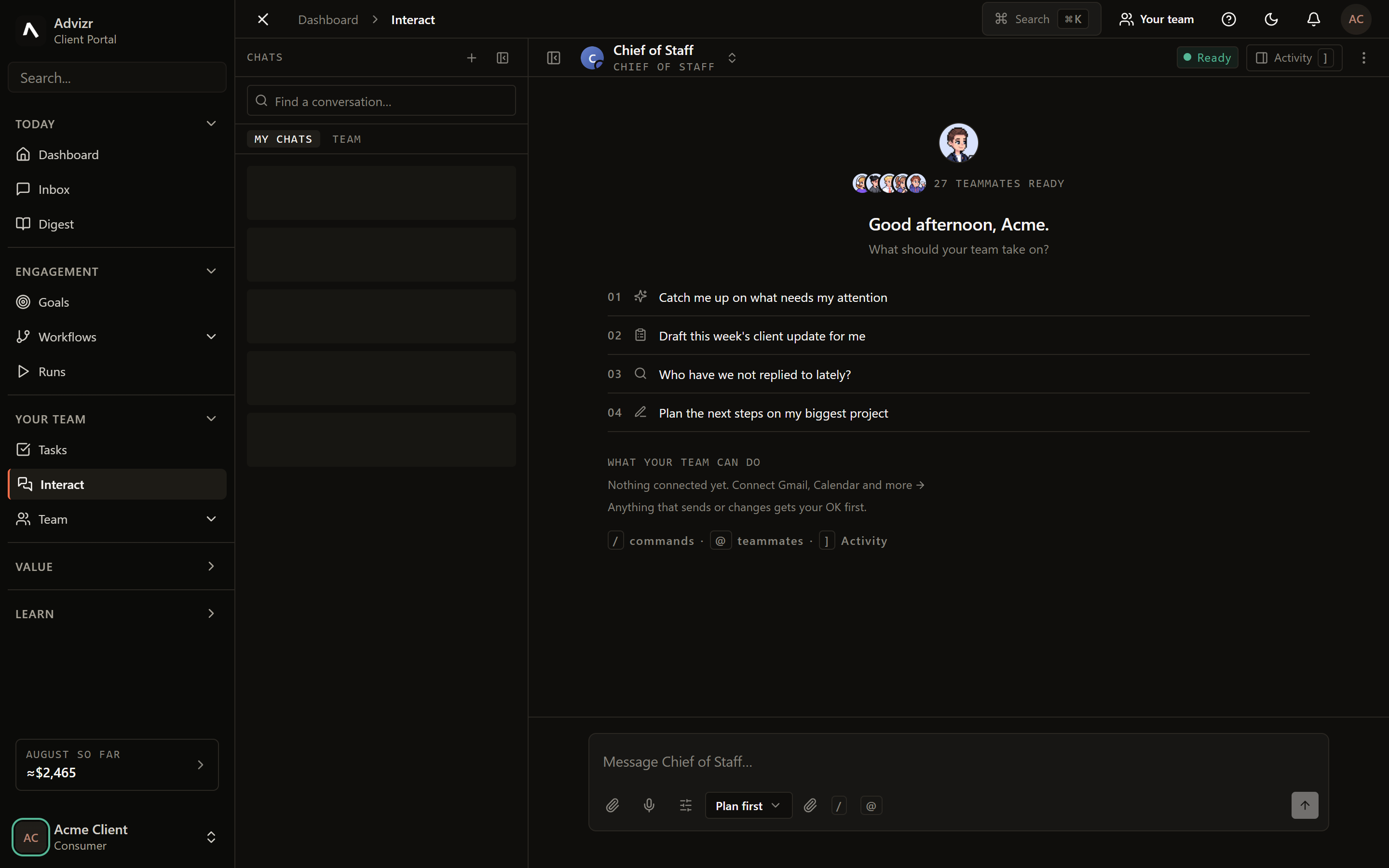
Chat interface
The chat layout: threads on the left, conversation in the middle, context on the right.

What you can do in Chat

Chat handles a wide range of requests. Here are some examples to get you started:

  • Ask strategy questions - “What are the biggest time sinks in our current invoicing process?”
  • Request deliverables - “Draft a project brief for automating our monthly reporting.”
  • Analyze documents - “Summarize the key risks in the operations manual I uploaded.”
  • Get status updates - “What is the current status of the lead generation workflow?”
  • Ask general questions - “What is the difference between RPA and AI automation?”

The AI draws on your uploaded documents and business context when it responds. A question about your invoicing process is answered using your SOPs and financial documents, not generic industry advice. The more context you provide through documents and objectives, the better the answers get — which is why the wizard asks for both before introducing Chat.

How the chat interface works

The chat screen has three areas on desktop:

  • Threads (left panel) - A list of your past conversations. Click any thread to resume it, or start a new one.
  • Conversation (centre) - The active chat. Type your message at the bottom and press Enter to send.
  • Context (right panel) - Shows information about the active agent, referenced documents, and tools being used.

On mobile, these panels collapse into a single-column view. Swipe or tap the menu icons to switch between threads and context.

Send your first message

Open Chat from the sidebar

Click Chat in the left sidebar. If you have existing threads, they appear on the left. To start fresh, click New Thread.

Choose an agent (optional)

Some workspaces have multiple AI agents configured for different tasks. If you see an agent selector, pick the one that matches your question. If not, the default agent handles everything.

Type your message

Write your question or request in the message box. Be specific — include names, dates, or document references where relevant.

Review the response

The AI responds with an answer that may include references to your documents, suggested next actions, or follow-up questions. You can continue the conversation in the same thread.

You should now see your message and the AI’s reply in the conversation panel, and the onboarding checklist on your Home screen marked complete.

When to use Chat vs booking a call

Use Chat for quick questions, document analysis, status updates, and task requests. Use Book a Call when you need a live conversation — strategy discussions, complex decisions, or situations where back-and-forth is faster than typing.

If something goes wrong

  • Your message will not send. Check your internet connection and refresh the page — your thread history is preserved.
  • The response feels generic. The AI may not have enough context yet. Upload more documents from the Documents section and reference them by name in your question.
  • You do not see an agent selector. That is normal — most workspaces use a single default agent that handles all requests.
  • A thread you started is missing. Scroll the threads panel or use its search bar; threads are never deleted automatically.

Still stuck? Send your FDE a message in Chat with your browser, a screenshot, and when it happened.

Next steps

message-circle
Work with Advizr in ChatThe full Chat reference: attachments, search, and when your FDE steps in.
home
Home dashboardLearn what appears on your Home screen and how to use it as your daily starting point.
pen-line
Prompt engineering basicsLearn to write requests that get better answers, in the Academy.
Last updated on